



Duoflora: Support Your Family’s Immune Health

Duoflora: Support Your Family’s Immune Health

Don’t Let Respiratory Infections Disrupt Your Family’s Life
It often starts with something small.
A cough or sniffle your child brings home from school or daycare.
A few days later, another family member is unwell. Before long, the whole household is dealing with fevers, coughs and sleepless nights.
Children in daycare and school settings are frequently exposed to respiratory infections.
And when one family member gets sick, others may soon follow.
The result? Missed school, missed work, disrupted routines and repeated visits to the doctor.
It’s exhausting for everyone.
And while you can’t shield your family from every germ, you can take a broader approach to supporting their health.
The Hidden Costs of Frequent Infections

Frequent illnesses affect more than just the person who gets sick. They can take a toll on the whole family.
- Disrupted Routines: Sick days mean missed school, missed work and cancelled plans.
- Repeated Medical Visits: Recurring symptoms can mean repeated consultations, monitoring and treatment.
- Emotional Strain: Watching your child struggle with fever and fatigue is difficult, especially when illnesses seem to keep coming back.
Supporting your family’s health means looking beyond individual illnesses and understanding the systems that contribute to overall well-being.
A Healthy Immune System Is a Balanced One

Your immune system works every day to recognize potential threats and respond appropriately.
But good immune health is about more than mounting a strong response.
It also involves maintaining balance and avoiding unnecessary reactions.
Your gut plays an important role in this process.
The gut microbiome, intestinal barrier and communication between the gut and immune system all contribute to this complex relationship.
That’s why supporting gut health is an important part of supporting overall immune health.
What Makes Duoflora Different?

Duoflora is developed around the Gut Immune Balance System
Its formulation brings together two well-studied human-derived probiotic strains:
- Lactobacillus rhamnosus GG (LGG): One of the most extensively researched probiotic strains, with studies exploring its role in digestive health and respiratory infection outcomes.
- Bifidobacterium breve M-16V: A human-derived strain studied for its role in early-life gut microbiome development, intestinal health and immune-related outcomes.
These strains have different research backgrounds and characteristics. Together, they form a carefully selected combination guided by a broader understanding of the gut–immune relationship.
You are human. Your probiotic should be too.
Clinical Evidence: Research Behind Duoflora
Research has explored how specific probiotic strains may influence respiratory health, particularly in children and people with allergic conditions.
Here are some of the clinical findings involving Duoflora probiotic strains
1. Real-World Impact in Daycare Settings
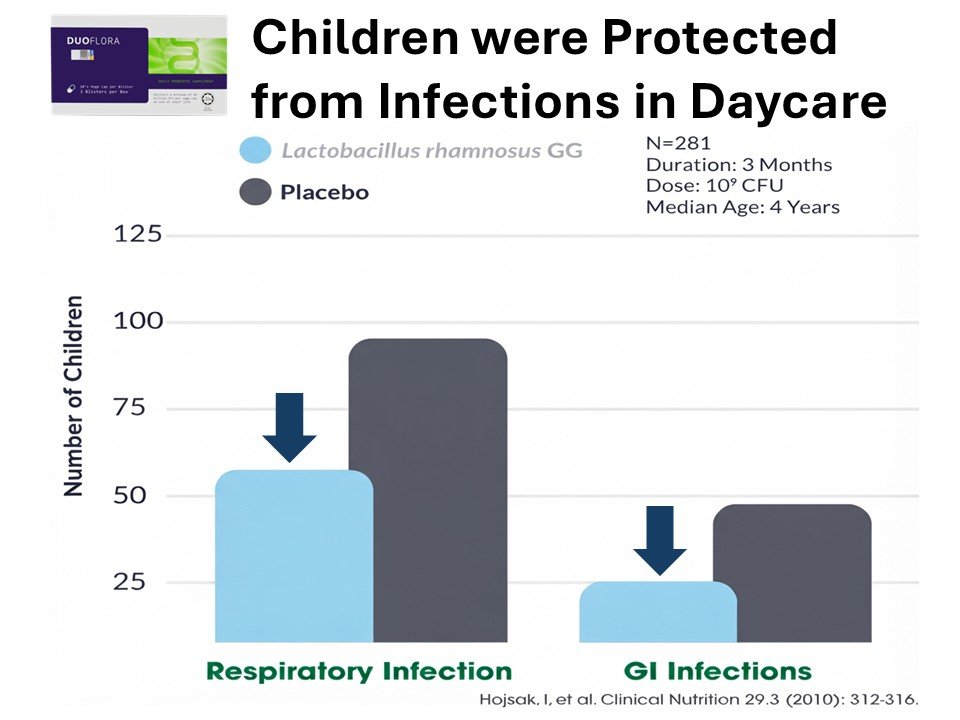
Children attending daycare are regularly exposed to other children, making respiratory infections a common concern for families.
In a randomized, double-blind, placebo-controlled study involving 281 children attending daycare centers, researchers investigated the effects of Lactobacillus rhamnosus GG (LGG) over three months.
Compared with placebo, children receiving LGG had a significantly lower risk of upper respiratory tract infections. They also had a lower risk of respiratory infections lasting longer than three days and fewer days with respiratory symptoms.
The findings suggest that LGG may help reduce the burden of upper respiratory infections among children in daycare settings.
2. Shorter Duration of Respiratory Infections
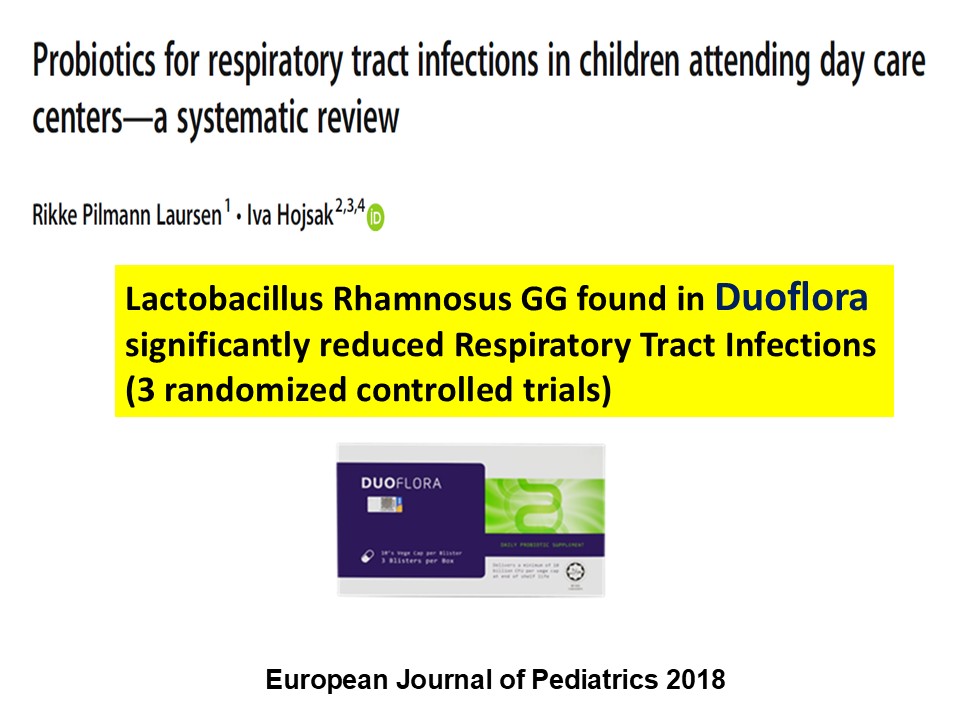
Beyond infection frequency, researchers have also examined whether probiotics can influence how long respiratory symptoms last.
A systematic review and meta-analysis by Laursen and Hojsak examined 15 randomized controlled trials involving 5,121 children attending daycare centers.
In the analysis of LGG, three studies involving 1,295 children found that LGG supplementation reduced the duration of respiratory tract infections by an average of 0.78 days compared with placebo.
In other words, children receiving LGG experienced respiratory tract infections that lasted nearly a day less, on average.
3. Respiratory Health
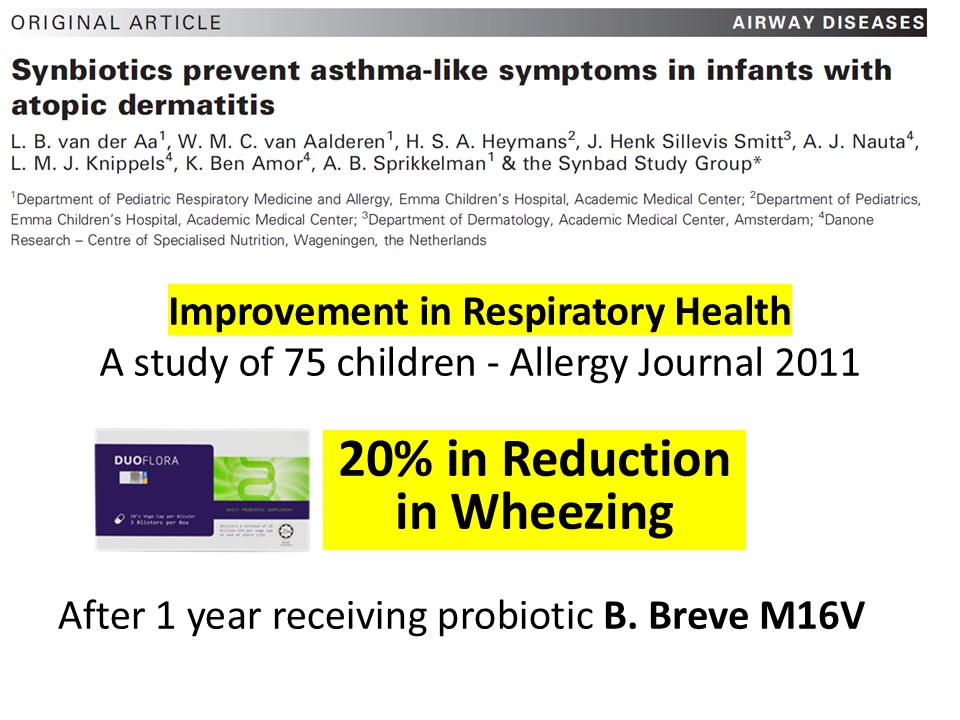
Research has also explored how early-life supplementation with Bifidobacterium breve M-16V, combined with specific prebiotics, may influence respiratory health.
In a double-blind, placebo-controlled study involving 90 infants with atopic dermatitis, researchers investigated an extensively hydrolyzed formula supplemented with M-16V and a specific combination of short-chain galactooligosaccharides (scGOS) and long-chain fructooligosaccharides (lcFOS).
The infants received the supplemented formula for 12 weeks and were followed up over one year.
At the one-year follow-up, children in the synbiotic group had significantly lower rates of frequent wheezing and wheezing or noisy breathing unrelated to colds. Fewer children in this group had also started using asthma medication.
These findings suggest that early-life supplementation with an M-16V-containing synbiotic may influence the development of respiratory symptoms in infants with atopic dermatitis.
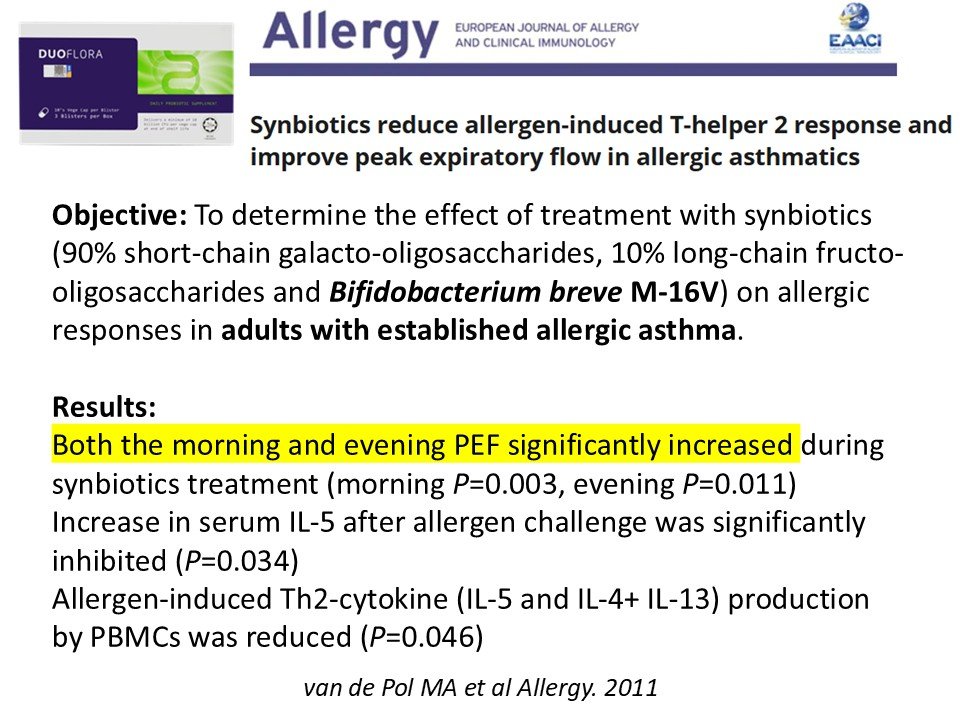
Further research involving M-16V and the same prebiotic combination has also examined allergic responses in adults with asthma. In a four-week study involving 29 adults with house dust mite allergy, researchers reported improvements in peak expiratory flow and changes in allergen-induced Th2 immune responses.
Together, these studies add to the research interest in M-16V-containing synbiotic formulations and their relationship with immune and respiratory health.
4. What Does the Cochrane Review Tell Us?
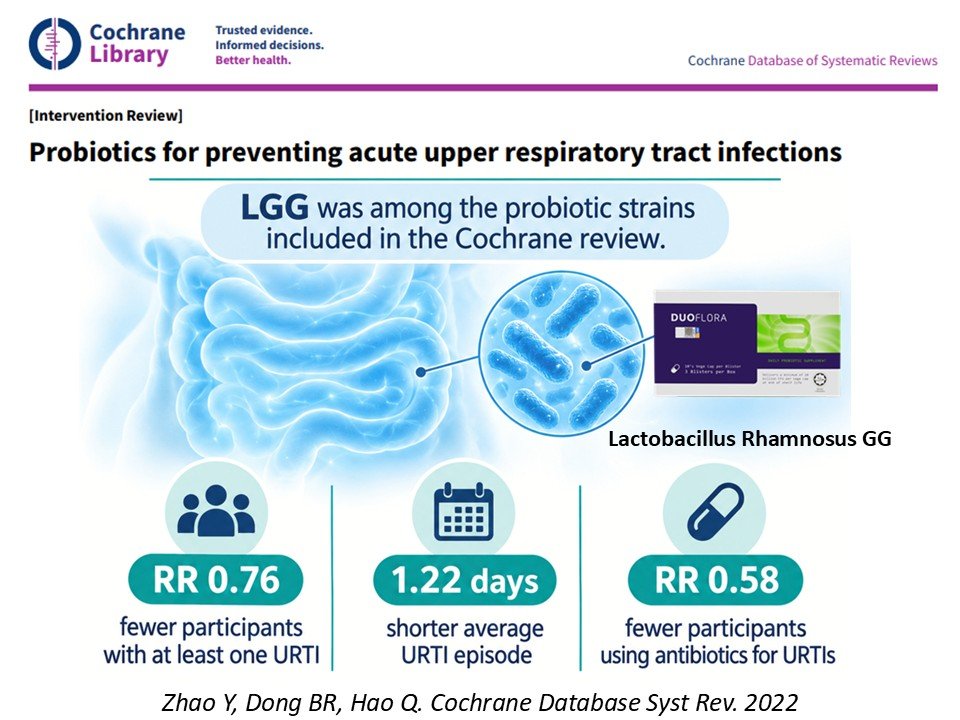
A respected Cochrane systematic review, published in 2022, evaluated randomized controlled trials investigating probiotics for the prevention of acute upper respiratory tract infections. The review included research involving several probiotic strains, including Lactobacillus rhamnosus GG (LGG).
Across the studies reviewed, probiotics were associated with:
- A lower likelihood of experiencing at least one upper respiratory tract infection.
- A lower incidence of respiratory infections.
- A shorter average duration of respiratory infection episodes.
- A lower likelihood of using antibiotics for upper respiratory tract infections.
The review found that probiotics may help reduce respiratory infections and their duration, although the certainty of evidence varied across outcomes.
These findings provide broader clinical context for probiotic research, including studies involving LGG.
Discover the thinking behind Duoflora and its Gut Immune Balance System.
Frequently Asked Questions
1. How quickly will I see results with Duoflora?
Individual responses to probiotics can vary. Consistent daily use is important when incorporating Duoflora into your routine.
2. Is Duoflora suitable for young children?
Yes! Duoflora is designed to be safe and effective for all ages, including children as young as 6 months.
3. Why do human-derived probiotic strains matter?
Probiotic effects are strain-specific. Human-derived strains have been isolated from human sources and studied for their interactions with the human gut.
4. How does Duoflora differ from other probiotics?
Duoflora combines two well-studied human-derived strains: Lactobacillus rhamnosus GG and Bifidobacterium breve M-16V, in a formulation guided by the Gut Immune Balance System.
Rather than focusing only on individual ingredients or CFU count, this approach considers three interconnected areas: the gut microbiome, gut barrier and gut–immune communication.
5. What if I don’t notice a difference?
Individual responses can vary, and probiotic research does not guarantee the same outcome for everyone. If you have questions about using Duoflora or your experience with it, contact our team for assistance.
6. Is Duoflora suitable for my dietary needs?
Duoflora is halal-certified. Please refer to the product label or contact us if you have specific dietary or ingredient-related questions.
Support Your Family’s Gut and Immune Health

Your family’s health is supported by many interconnected systems.
Understanding the relationship between your gut and immune system is one way to take a more considered approach to everyday well-being.
Duoflora brings together two well-studied human-derived probiotic strains in a formulation guided by the Gut Immune Balance System.
Because a healthy immune system is a balanced one.
You are human. Your probiotic should be too.
References
- Hojsak I, Snovak N, Abdović S, Szajewska H, Mišak Z, Kolaček S. Lactobacillus GG in the prevention of gastrointestinal and respiratory tract infections in children who attend day care centers: a randomized, double-blind, placebo-controlled trial. Clin Nutr. 2010 Jun;29(3):312–316. doi: 10.1016/j.clnu.2009.09.008.
- Laursen RP, Hojsak I. Probiotics for respiratory tract infections in children attending day care centers—a systematic review. Eur J Pediatr. 2018 Jul;177(7):979–994. doi: 10.1007/s00431-018-3167-1.
- van der Aa LB, van Aalderen WMC, Heymans HSA, et al. Synbiotics prevent asthma-like symptoms in infants with atopic dermatitis. Allergy. 2011 Feb;66(2):170–177. doi: 10.1111/j.1398-9995.2010.02416.x.
- van de Pol MA, Lutter R, Smids BS, Weersink EJM, van der Zee JS. Synbiotics reduce allergen-induced T-helper 2 response and improve peak expiratory flow in allergic asthmatics. Allergy. 2011 Jan;66(1):39–47. doi: 10.1111/j.1398-9995.2010.02454.x.
- Zhao Y, Dong BR, Hao Q. Probiotics for preventing acute upper respiratory tract infections. Cochrane Database Syst Rev. 2022 Aug 24;8(8). doi: 10.1002/14651858.CD006895.pub4.